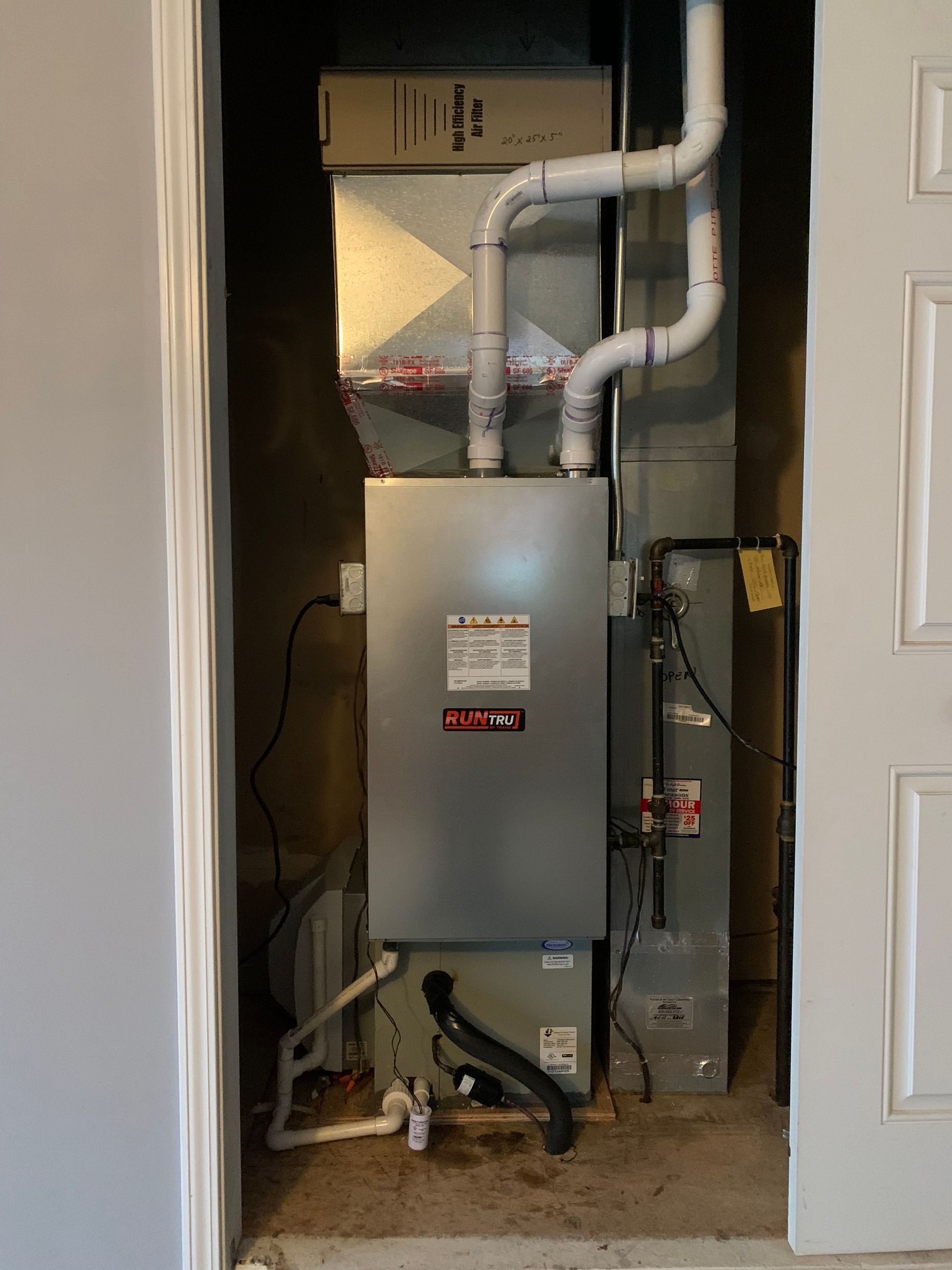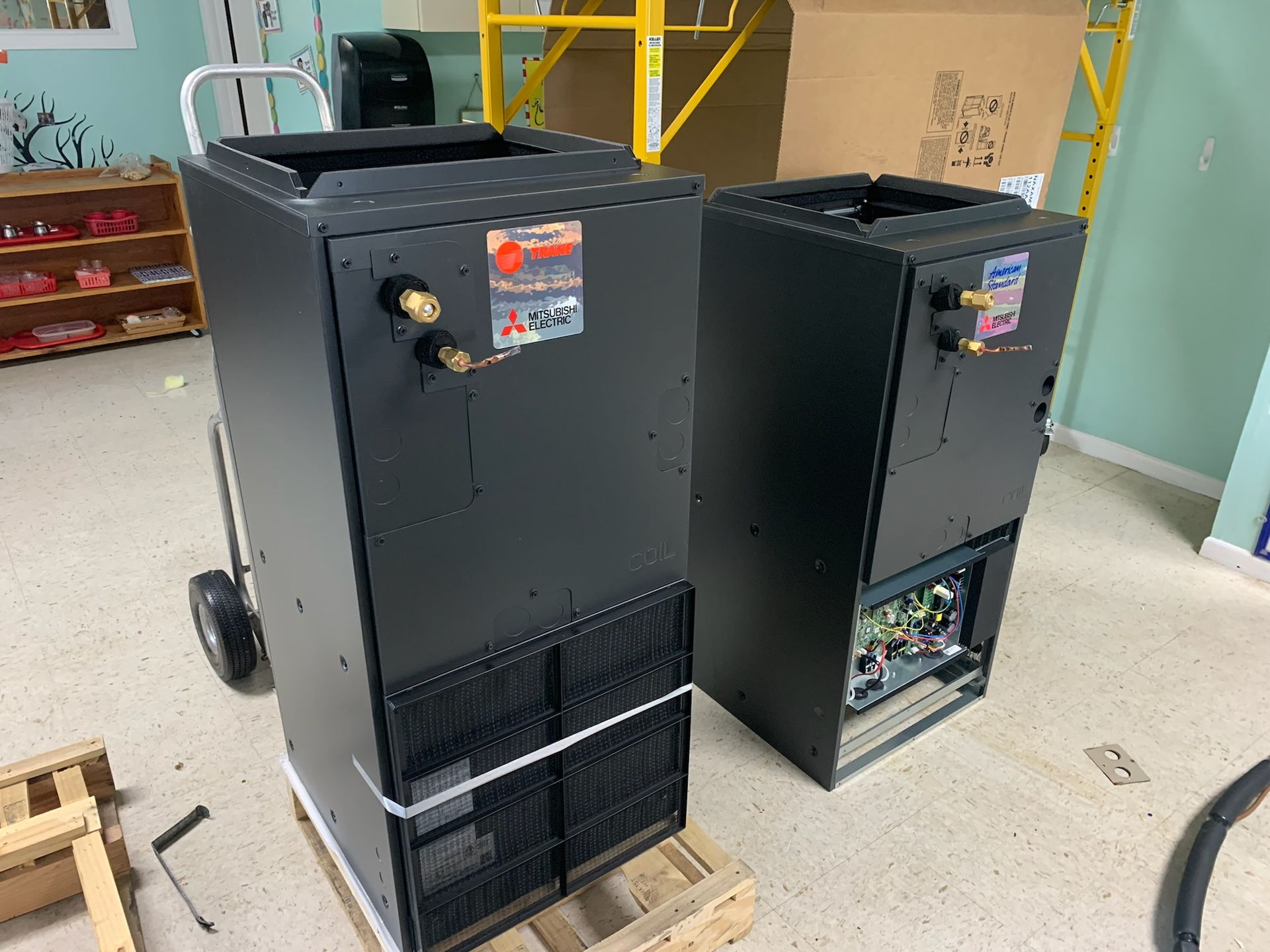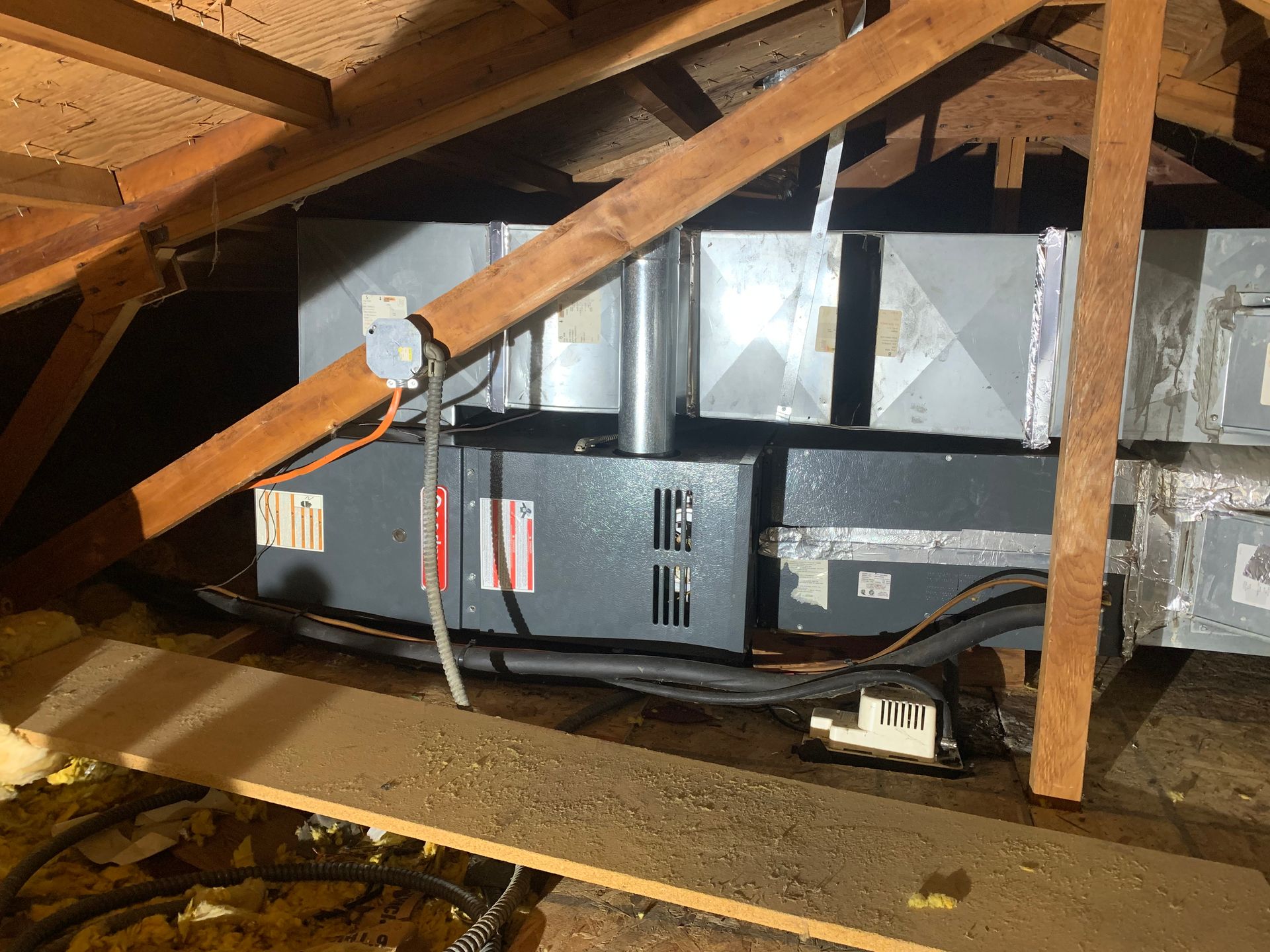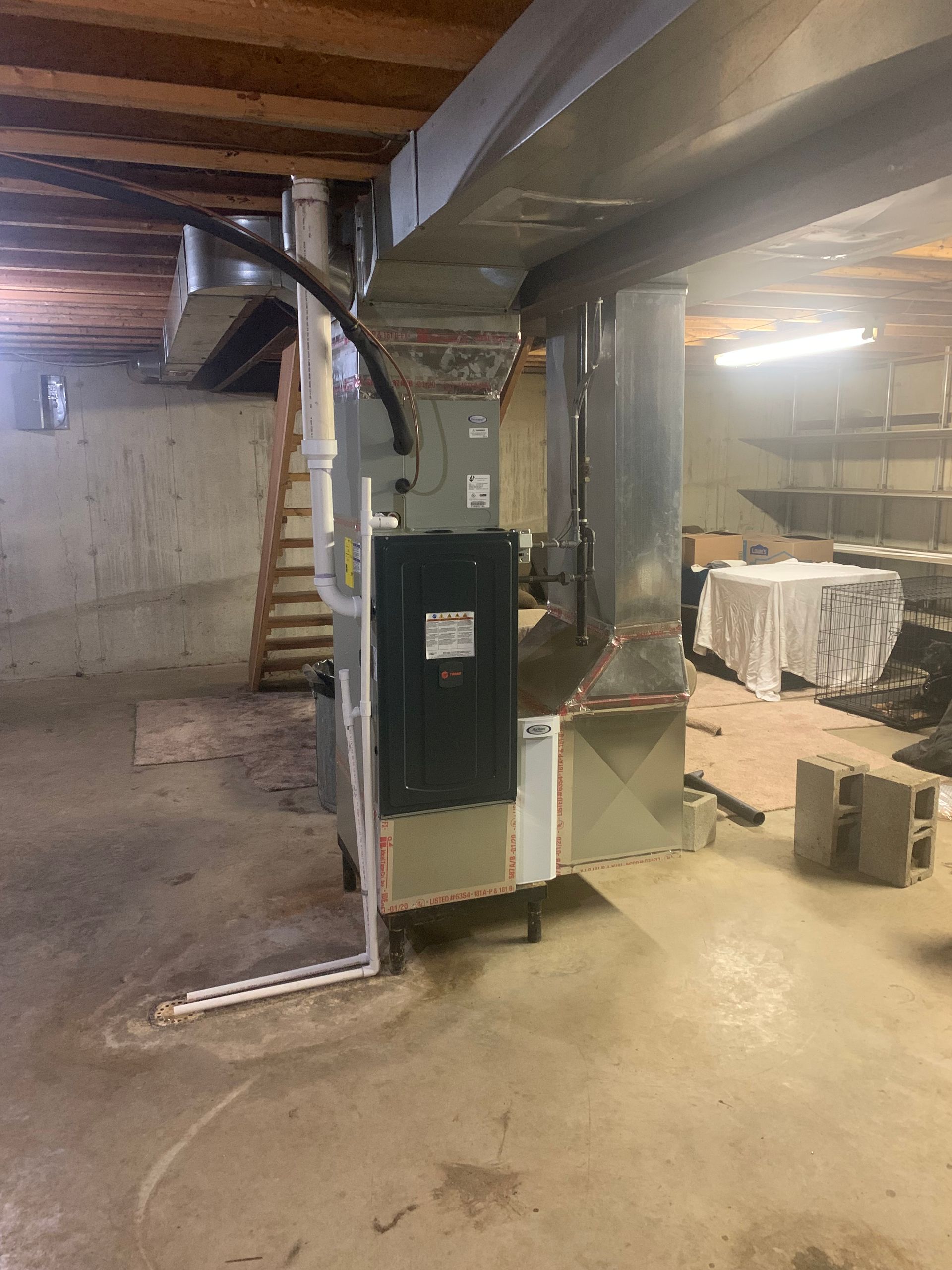
Furnace Installation and Replacement in Chesterton, Indiana
Trane furnace replacements for Chesterton homes, sized from a load calculation and quoted after an in-home visit.
When the Builder's Furnace Reaches the End of Its Life
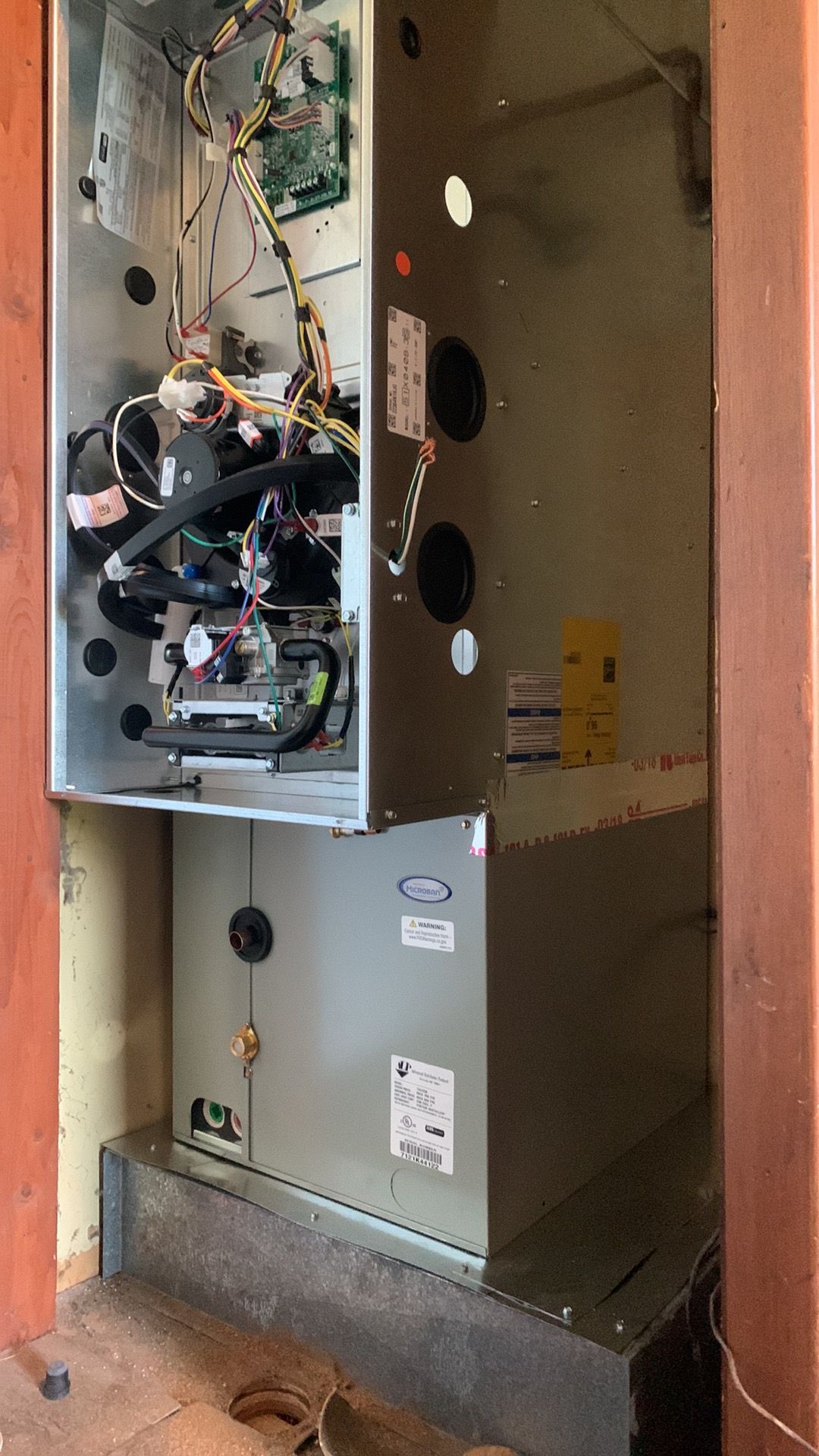
A lot of the furnace replacements we do in Chesterton are in homes built in the last twenty to twenty-five years, where the original builder-grade furnace is now failing. Builder-grade equipment was chosen for price, not longevity, and it was often sized by rule of thumb rather than by a calculation on the house. The result is a furnace that short-cycled for years, heated the second floor unevenly, and is now on its second blower motor or showing cracks in the heat exchanger.
Replacing it is a chance to fix those problems rather than repeat them. We run a load calculation on the house, check the ductwork and return air, and recommend equipment that matches what the home actually needs. For two-story Chesterton homes where the upstairs never quite keeps up, a two-stage or variable-speed furnace often solves a comfort problem the original unit never could.
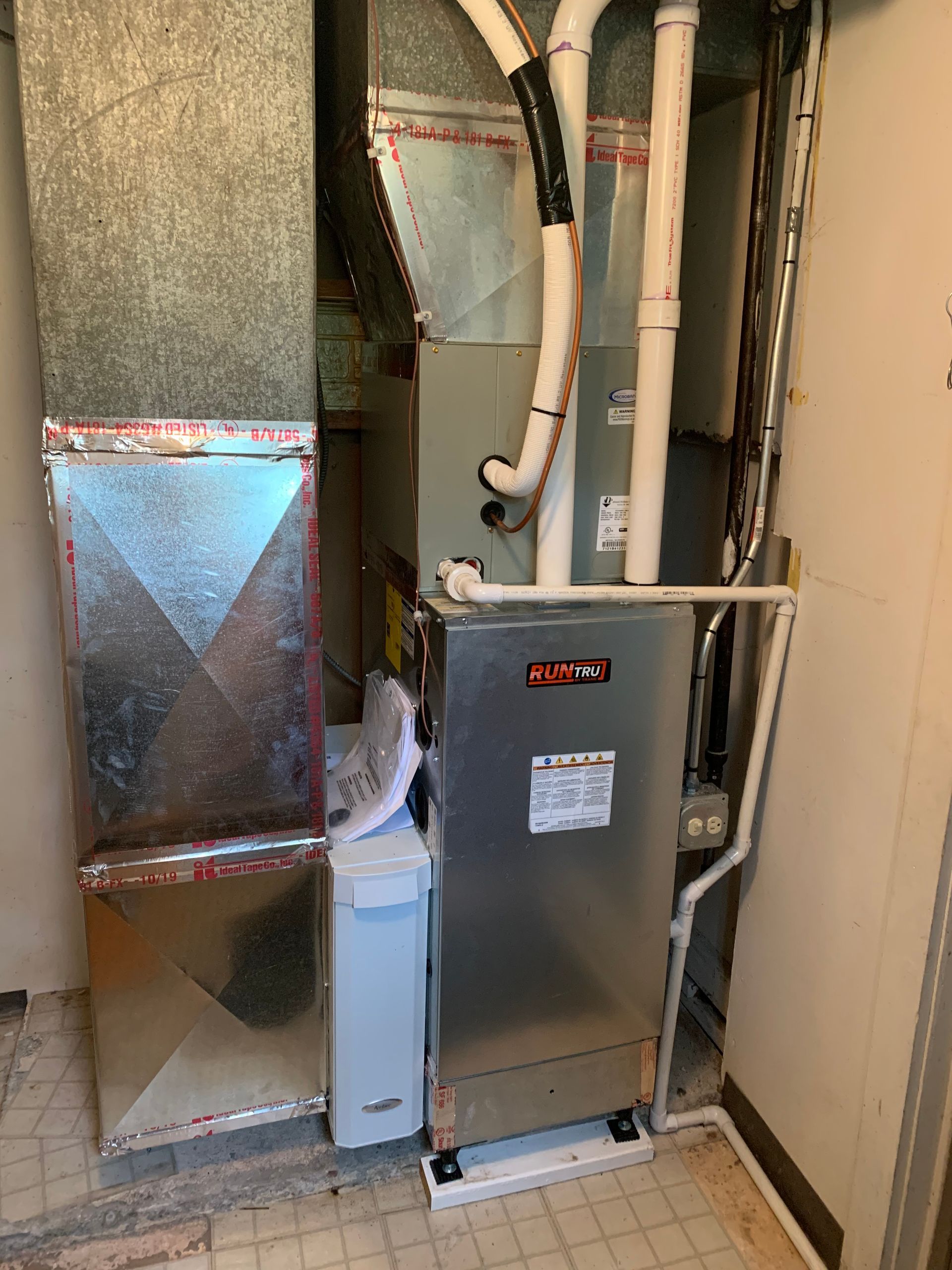
Apex installs Trane furnaces and services every brand. We do not quote replacements over the phone, because the duct condition, the venting, and the furnace location change the job. The in-home consultation is free and the number you get afterward is the number you pay.
Give us a call today at (219) 299-7134.

Licensed, Bonded & Insured
Financing Options Available
Emergency Service
Competitive Pricing
Replacing Before It Fails, or After
Most Chesterton homeowners call us one of two ways: the furnace has already quit on a cold night, or it is still running but the repair bills are adding up and they want to replace it on their own schedule. The second is easier on everyone. A planned replacement in fall means no emergency pricing on equipment, no scrambling for a slot during the first cold snap, and time to compare options. If yours is still running but past fifteen years old, a consultation now costs nothing and tells you where you stand.
Either way, a Chesterton furnace replacement with Apex includes:
- A load calculation and duct check before any equipment is recommended
- Trane equipment with full factory warranties on parts and labor
- Two-stage and variable-speed options for homes with uneven heating
- Venting and thermostat work included in the quote
- Financing options for qualifying homeowners
If a repair makes more sense, we will say so. Our Chesterton furnace repair service covers every brand, 24/7.
-
How do I know it's time to consider replacing my furnace?
Deciding when to replace your furnace involves considering several factors. Here are some key indicators that it might be time to replace your furnace:
Age of the Furnace: The average lifespan of a furnace is typically around 15-20 years. If your furnace is reaching or surpassing this age, and you are experiencing frequent breakdowns or reduced efficiency, it may be more cost-effective to invest in a new, energy-efficient model.
Frequent Repairs: If you find yourself repeatedly calling for furnace repairs and the costs are adding up, it may be a signal that your furnace is becoming less reliable and more prone to issues. Investing in a new system could save you money in the long run.
Increased Energy Bills: As furnaces age, they often become less efficient, leading to higher energy bills. If you notice a significant and unexplained increase in your heating costs, it could be a sign that your furnace is no longer operating at peak efficiency.
Inconsistent Heating: If some rooms in your home are consistently too hot or too cold, or if your furnace struggles to maintain a consistent temperature, it may indicate that your system is no longer capable of distributing heat evenly.
Strange Noises: Unusual noises, such as banging, rattling, or popping sounds, may indicate mechanical problems within the furnace. If these issues persist despite repairs, it might be time for a replacement.
Yellow Pilot Light: A pilot light that is consistently yellow instead of blue can be a sign of incomplete combustion, potentially producing carbon monoxide. This is a serious safety concern, and if you observe a yellow pilot light, you should turn off the furnace immediately and seek professional assistance.
Visible Signs of Rust or Cracks: If you notice visible signs of corrosion, rust, or cracks in your furnace, it could indicate structural issues. A compromised furnace can pose safety risks, and replacement may be necessary.
Changes in Home Comfort Needs: If you've made significant changes to your home, such as additions or renovations, and your current furnace is no longer able to meet the heating demands, it may be time to upgrade to a more powerful or efficient system.
Safety Concerns: If your furnace poses a safety risk due to issues such as gas leaks, carbon monoxide leaks, or repeated malfunctions, it's crucial to prioritize the safety of your household and consider replacing the unit.
When contemplating furnace replacement, it's advisable to consult with a licensed HVAC professional. They can assess the condition of your current system, discuss your heating needs, and provide recommendations for the most suitable replacement options. Investing in a new, energy-efficient furnace not only improves comfort but can also result in long-term energy savings.
-
What is the average life expectancy of HVAC equipment?
Most systems have a lifetime of 10 to 20 years. As your equipment gets older, its efficiency can decrease dramatically. You may notice that it gets noisier and needs repairs more often. When a unit begins to show its age, you have two choices. You can overhaul the system or replace it. Because heating and cooling technologies improve over time, a new system designed with newer, more energy-efficient equipment makes sense, especially if your system is 10 or more years old. We can estimate the cost of a new system as well as a payback schedule that will show you how newer technology will pay you back in lower energy usage.
-
How can I reduce my heating costs?
Upgrade to a high-efficiency furnace. New high-efficiency furnaces use up to 50% less fuel than an older system. It can save you up to 25 percent of your home-heating costs in one year, and within a few years, you'll have recovered the initial cost of replacing/upgrading your furnace. Choosing a model with an energy-efficient motor can save 20 to 50 percent of the energy needed to continuously operate a fan motor. Let us show you the advantages of replacing your old furnace today.
Have annual maintenance performed. Having annual maintenance performed on your furnace by a licensed technician will help ensure it operates at its peak efficiency and catches any potential breakdowns before they occur.
Install a programmable thermostat. A programmable thermostat enables you to control your home's temperature when you're away or asleep. For every 1° you lower your thermostat for seven hours per day, you save one percent on your heating bill.
Don't block vents in well-used rooms. Keep your supply and return air vents free of objects like blinds, carpets, or furniture so your furnace can operate efficiently and there is even heat distribution.
Install ceiling fans. Change the direction of airflow on your ceiling fans. In the winter, the blades should operate in a clockwise direction, helping to push the warm air from the ceiling down into the room.
-
Why should I buy Energy Star labeled equipment?
The average home spends about $1,900 annually on energy bills. Heating and cooling account for as much as half of a home's energy use. The EPA provides important recommendations for energy-efficient equipment, including proper sizing, quality installation and maintenance, and other home improvement considerations to help you get the most out of the heating and cooling products you purchase, save energy, and save as much as 20% annually on your total energy costs.
ENERGY STAR-qualified products prevent greenhouse gas emissions by meeting strict energy efficiency guidelines set by the U.S. Environmental Protection Agency (EPA) and the U.S. Department of Energy (DOE).
-
How often should I change my furnace filter?
You should replace the air filter in your furnace on a regular basis. Dirty air filters reduce the amount of air flowing through a system and make the furnace work harder to maintain the temperature. How often you change the filter depends on the type of filter you use, if you have pets and the size of your equipment. Please give us a call and we can give you proper guidance.
-
What does SEER, AFUE, and HSPF ratings mean to me?
SEER, AFUE, and HSPF are all measures of energy efficiency. Air conditioners may look similar, but their Seasonal Energy Efficiency Rating (SEER) can vary widely. Higher SEER numbers save more money spent on electricity. A 13 SEER air conditioner, the EPA "current minimum standard", uses 23% less energy than a 10 SEER unit (EPA standard up until Jan. 2006). Even though 13 SEER is the minimum efficiency available, we currently offer a line of air conditioners that start at 13 SEER and go all the way up to 21 SEER. Depending on your average usage, higher SEER air conditioners can significantly reduce your electric bill.
Heat pumps have SEER ratings like air conditioners and Heating Seasonal Performance Factor (HSPF) ratings for measuring heating efficiency. Higher HSPF ratings mean greater energy savings. The HSPF scale range is 7.5 to 13.0.
Today's new high-efficiency furnaces can save up to 50% in operating costs over a ten-year-old furnace. Many 1990 and earlier model furnaces have Annual Fuel Utilization Efficiency (AFUE) ratings of 65% or less. The minimum AFUE-rated furnace that can be sold in the United States as of May 1, 2013, is 80% in southern states and 90% in northern states.
Our current product offering starts at this minimum AFUE rating and goes all the way to a very efficient 98.3% AFUE rating. Depending on your average usage, higher AFUE-rated furnaces can significantly reduce your gas bill.
My upstairs never gets as warm as the first floor. Will a new furnace fix that?
Often, if the replacement is sized correctly and the ductwork can support it. A two-stage or variable-speed furnace runs longer at a lower output, which pushes more heat to the far ends of the system. We check the ducts and returns during the consultation and tell you what is realistic for your house.
Should I replace my furnace before it fails?
If it is past fifteen years old and has needed repairs in the last couple of winters, a planned replacement in fall is usually the better path. You avoid an emergency call in January and get time to compare options. A consultation costs nothing and tells you where the furnace stands.
Apex also provides furnace repair in Chesterton , AC installation in Chesterton , AC repair in Chesterton , and ductless mini-splits in Chesterton . See our Chesterton heating and cooling page for everything we do locally. We also install furnaces in Porter , Burns Harbor , and Valparaiso .
What People Say About Us
"Apex was very efficient and a great value. When our furnace stopped working, Ed was able to come out that day (a weekend) to assess and give an estimate. He was back within a few short days to install our new furnace! He is professional, flexible, and trustworthy. Would recommend/use again!"
Contact us any time
Contact us any time
We will get back to you as soon as possible.
Please try again later.