Understanding Furnace Efficiency Ratings: What Northwest Indiana Homeowners Should Know
When you're shopping for a new furnace in Northwest Indiana, you'll encounter a confusing array of numbers, percentages, and technical terms. Among the most important is AFUE, or Annual Fuel Utilization Efficiency. This single number can tell you more about your future heating costs than almost any other specification, yet many homeowners don't fully understand what it means or how it impacts their wallet. Understanding AFUE ratings isn't just about making an informed purchase decision. It's about understanding exactly how much of your heating dollar is actually warming your home versus literally going up in smoke.
After installing and servicing hundreds of furnaces throughout Chesterton, Portage, Hobart, and surrounding Porter County communities, we've seen firsthand how AFUE ratings translate to real-world comfort and cost savings. The difference between an 80% AFUE furnace and a 95% AFUE model might not sound dramatic, but over the life of your heating system, that percentage difference can mean thousands of dollars in energy savings or wasted fuel. This comprehensive guide breaks down everything Northwest Indiana homeowners need to know about furnace efficiency ratings to make the smartest investment for their home.
What Does AFUE Actually Mean?
AFUE stands for Annual Fuel Utilization Efficiency, and it measures how effectively your furnace converts fuel into usable heat over an entire heating season. Think of AFUE as a report card for your furnace's efficiency. An 80% AFUE rating means that for every dollar you spend on fuel, 80 cents goes toward heating your home while 20 cents is lost through exhaust gases and other inefficiencies. The remaining heat literally escapes through your chimney or vent pipe, representing money you've spent but gained no benefit from.
This measurement is standardized by the Department of Energy, ensuring that when you compare AFUE ratings between different furnace brands and models, you're making true apples-to-apples comparisons. The rating accounts for startup and cooldown cycles, steady-state operation, and all the real-world variables that affect furnace performance throughout a typical heating season. It's not just a theoretical laboratory number. AFUE ratings reflect how furnaces actually perform in homes like yours throughout Northwest Indiana's variable winter weather.
Understanding this measurement becomes crucial when you consider that heating typically accounts for 40-60% of a home's total energy costs in our region. With harsh winters that stretch from October through April, even small differences in efficiency compound into substantial cost differences over time. A furnace that wastes 20% of your fuel costs you significantly more than one that wastes only 5%, especially when you're heating your home for six to seven months every year.
Current AFUE Standards and What They Mean for You
Modern furnaces sold in the United States must meet minimum AFUE requirements established by federal regulations. For northern regions like Indiana, the minimum AFUE for non-weatherized gas furnaces is 90%. This represents a dramatic improvement over older furnaces, many of which operated at 60-70% efficiency or even lower. If your current furnace is more than 15 years old, it's likely operating well below modern efficiency standards, costing you hundreds of dollars annually in wasted energy.
Today's furnace market offers three general efficiency categories. Standard efficiency furnaces, which are increasingly rare in new installations, operate at 80-85% AFUE. These single-stage systems use atmospheric combustion and typically vent through a chimney. Mid-efficiency furnaces operate at 90-93% AFUE, offering significant energy savings with condensing technology that captures additional heat from exhaust gases. High-efficiency furnaces achieve 95-98% AFUE, representing the pinnacle of current heating technology with advanced features like modulating burners and sophisticated control systems.
For Northwest Indiana homeowners, the jump from an old 60% AFUE furnace to a modern 95% AFUE model means you could potentially cut your heating fuel consumption by more than one-third while maintaining the same comfort level. That's not just an abstract number. In practical terms, if you were spending $1,500 per winter on natural gas with your old furnace, a high-efficiency replacement could reduce that cost to around $1,000 annually, saving you $500 every single year while delivering superior comfort and reliability.
The Technology Behind High-Efficiency Furnaces
High-efficiency furnaces achieve their impressive AFUE ratings through sophisticated technology that extracts maximum heat from combustion gases before venting them outdoors. The key innovation is condensing technology, which captures heat that standard furnaces simply discard. When natural gas burns, it produces water vapor along with heat. In standard furnaces, this water vapor exits through the vent pipe as steam, carrying substantial thermal energy with it. Condensing furnaces cool exhaust gases to the point where water vapor condenses back into liquid, releasing its latent heat in the process.
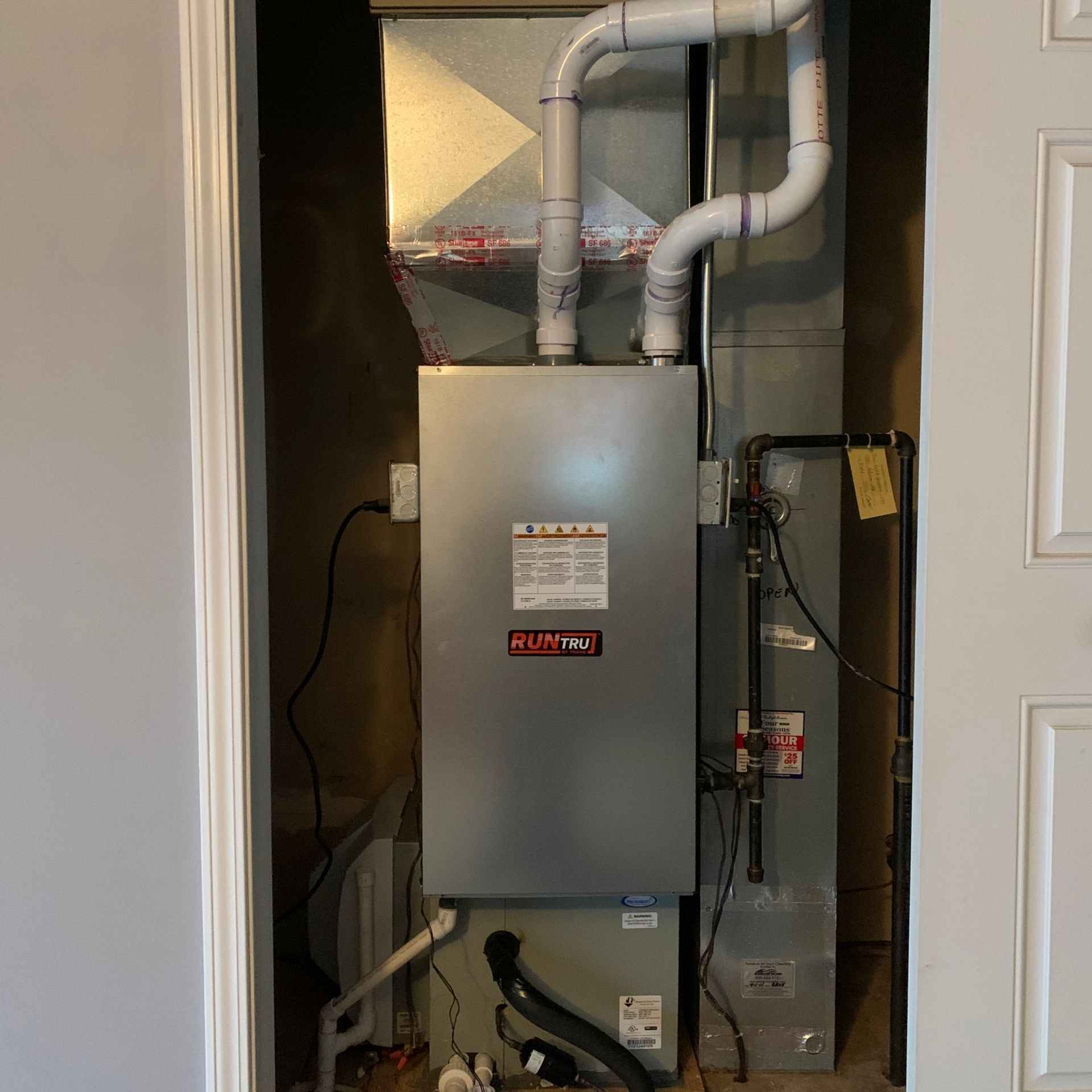
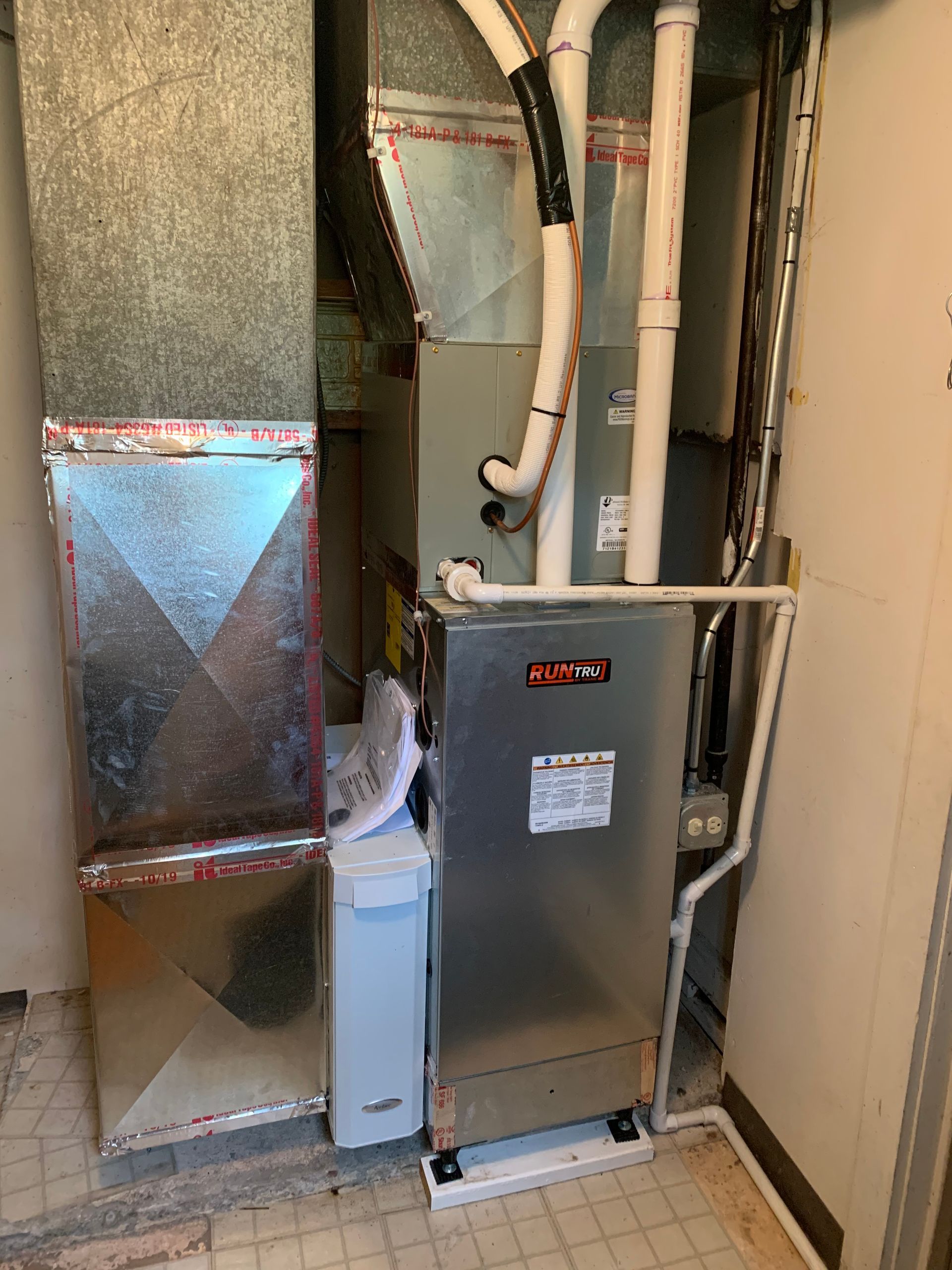
This condensation process happens in a secondary heat exchanger specifically designed to maximize heat extraction while preventing corrosion from the acidic condensate that forms. The condensed water drains away through a dedicated drain line, while the exhaust gases exit at a much cooler temperature through PVC pipe rather than requiring a traditional metal chimney. Because exhaust temperatures are so much lower in high-efficiency furnaces, they can safely use plastic vent pipes that cost less to install and maintain than traditional chimney systems.
Beyond condensing technology, high-efficiency furnaces incorporate variable-speed blowers that precisely control airflow for optimal comfort and efficiency. These advanced motors consume up to 75% less electricity than traditional single-speed blowers while delivering more consistent temperatures throughout your home. Modulating burners in top-tier models can adjust heat output in tiny increments, matching your home's heating needs precisely rather than cycling fully on and off repeatedly. This precise control not only saves energy but also extends equipment life by reducing the wear associated with constant cycling.
Calculating Your Potential Savings
Understanding the potential return on investment from a high-efficiency furnace requires looking at your specific situation, including your home's size, insulation quality, your family's comfort preferences, and local fuel costs. Let's work through a realistic example for a typical Porter County home. Consider a 2,000 square-foot home with average insulation that currently uses an old furnace with 65% AFUE. This home might consume 1,000 therms of natural gas annually for heating at Northwest Indiana's average rate of approximately $1.50 per therm, resulting in an annual heating cost of $1,500.
If you replace that 65% AFUE furnace with a 95% AFUE model, the math becomes compelling. Your new furnace delivers the same heat output while consuming only about 68% of the fuel your old furnace required. That 1,000-therm annual consumption drops to approximately 680 therms, reducing your annual heating costs to around $1,020. That's a savings of nearly $480 per year, every single year, for as long as you own your furnace. Over a typical 15-20 year furnace lifespan, that single upgrade could save you between $7,200 and $9,600 in heating costs.
The higher upfront cost of a 95% AFUE furnace compared to a standard efficiency model typically ranges from $1,500 to $2,500 depending on size and features. Given annual savings of $480, your payback period would be approximately 3-5 years. After that point, you're putting money back in your pocket every single month of the heating season. Factor in available utility rebates, tax credits, and manufacturer incentives that can reduce your initial investment, and the financial case becomes even stronger. Our team at Apex Heating & Cooling helps homeowners navigate these incentive programs to maximize savings on high-efficiency equipment.
Beyond AFUE: Other Efficiency Factors That Matter
While AFUE is the primary efficiency metric for furnaces, it doesn't tell the complete story about your heating system's performance. Proper sizing is absolutely critical for efficiency and comfort. A furnace that's too large for your home will cycle on and off frequently, wasting energy during each startup and failing to run long enough to reach peak efficiency. An undersized furnace runs continuously during cold weather, struggling to maintain temperature and potentially failing prematurely under constant strain. Professional load calculations consider your home's specific characteristics including square footage, insulation, window quality, air leakage, and dozens of other factors to determine the optimal furnace capacity.
Installation quality dramatically affects real-world efficiency regardless of your furnace's AFUE rating. Leaky ductwork can waste 20-30% of heated air before it even reaches your living spaces. Improper combustion air supply reduces efficiency and creates potential safety hazards. Incorrect airflow settings cause uneven heating and increased energy consumption. At Apex Heating & Cooling, owner Ed Miller personally handles every furnace installation, ensuring meticulous attention to details that mass-market contractors often overlook. We don't rush through installations to meet quotas. We take the time to do it right, because we know our reputation depends on every job performing flawlessly.
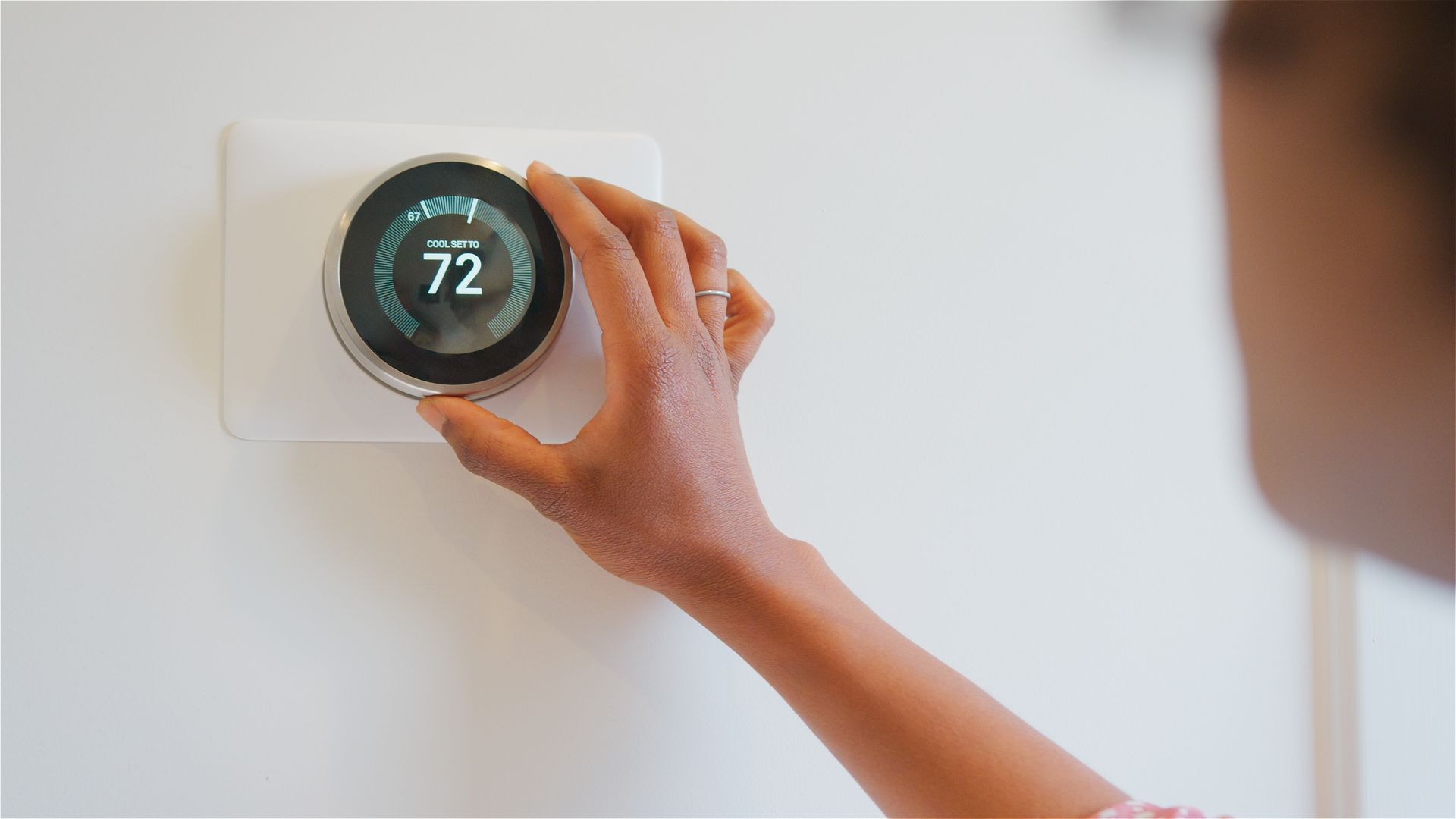
Thermostat technology also impacts your heating efficiency significantly. Programmable thermostats reduce heating costs by automatically lowering temperatures when you're asleep or away from home. Smart thermostats learn your schedule and preferences, making optimization automatic while giving you remote control through your smartphone. Some advanced models even integrate with weather forecasts to pre-heat or reduce heating in anticipation of temperature changes. For homes with inconsistent room temperatures, zone control systems allow you to heat different areas independently, avoiding the waste of heating unused spaces to maintain comfort in occupied areas.
Lake Effect Weather and Efficiency Considerations
Northwest Indiana's proximity to Lake Michigan creates unique heating challenges that affect how efficiently your furnace operates. Lake effect weather patterns can cause dramatic temperature swings within hours, with morning temperatures in the 40s plunging to the teens by evening as cold air masses move across the relatively warm lake water. These rapid temperature changes force your furnace to cycle more frequently than in areas with more stable weather patterns, potentially reducing real-world efficiency compared to the laboratory-tested AFUE rating.
High-efficiency furnaces with modulating or two-stage burners handle these weather variations more effectively than single-stage models. Instead of cycling fully on and off repeatedly as temperatures fluctuate, modulating furnaces adjust their heat output continuously to match changing demand. This steady operation maintains more consistent indoor temperatures while using less energy than constant cycling. For Lakes of the Four Seasons residents and others in lakefront communities, the premium for modulating technology often pays for itself more quickly due to the demanding weather conditions unique to the lakeshore region.
The heavy snow and extreme cold that lake effect weather brings also impacts heating system performance. Furnace exhaust vents can become blocked by heavy snow accumulation, forcing safety shutdowns. Properly designed and installed high-efficiency systems account for these challenges with appropriate vent termination heights and locations that minimize snow-related issues. Our experience serving Burns Harbor and other lakefront communities has taught us how to design heating systems that stand up to the worst weather Lake Michigan can throw at them.
The Hidden Costs of Low Efficiency
Beyond direct fuel costs, low-efficiency furnaces impose several hidden expenses that homeowners often overlook when evaluating replacements. Frequent repairs become increasingly common as furnaces age and efficiency declines. Components work harder to deliver heat, wearing out faster and failing more often. An older, inefficient furnace might require several hundred dollars in repairs annually, costs that simply vanish when you upgrade to reliable, modern equipment. These repair costs should factor into your total cost of ownership when comparing old inefficient equipment to new high-efficiency replacements.
Environmental impact represents another hidden cost of inefficiency. Lower AFUE ratings mean your furnace burns more fuel to deliver the same heat, increasing your carbon footprint and contributing to air quality concerns. While this environmental cost doesn't show up on your utility bill, it's an important consideration for homeowners who value sustainability. Modern high-efficiency furnaces can reduce your heating-related carbon emissions by 30-40% compared to older models, a significant contribution to environmental protection that also saves you money.
Comfort costs manifest in subtle but important ways with inefficient heating equipment. Older furnaces with single-speed blowers create noticeable temperature swings as they cycle on and off. The house gets too warm immediately after the furnace starts, then gradually cools until the cycle repeats. High-efficiency furnaces with variable-speed blowers eliminate these swings, maintaining more consistent temperatures with gentler air movement that doesn't create drafts or hot spots. The improved comfort is difficult to quantify financially, but it's a real quality-of-life enhancement that homeowners consistently report valuing highly after upgrading to efficient equipment.
Choosing the Right AFUE for Your Situation
The highest AFUE rating isn't automatically the best choice for every homeowner. Your optimal furnace efficiency depends on multiple factors unique to your situation. If you plan to stay in your home for many years, investing in the highest efficiency makes strong financial sense because you'll recoup the premium through energy savings over time. For homeowners planning to move within a few years, a mid-efficiency furnace might offer better return on investment, providing significant savings without the premium cost of top-tier efficiency.
Your home's existing infrastructure affects efficiency options. Converting from an older furnace to high-efficiency equipment might require modifications including new venting, condensate drain installation, and potentially upgraded gas piping or electrical service. These additional costs can affect the payback calculation. However, if you're already facing duct modifications or electrical upgrades for other reasons, adding high-efficiency equipment during the same project often makes economic sense by leveraging work that's happening anyway.
Budget constraints are real, and we respect that not every homeowner can invest in the highest efficiency equipment immediately. That's why we offer financing options and work with you to find solutions that improve your situation within your budget. Sometimes a mid-efficiency furnace represents the right balance of upfront affordability and long-term savings. We provide honest recommendations based on your specific circumstances, never pushing you toward premium equipment that doesn't make sense for your situation. Our goal is your long-term satisfaction, not maximizing individual sale amounts.
Maintenance and Efficiency: The Critical Connection
Even the most efficient furnace won't deliver rated performance without proper maintenance. Dirty filters restrict airflow, forcing your system to work harder and consume more energy while delivering less heat. A clogged filter can reduce efficiency by 5-15% even on a high-AFUE furnace. Simple monthly filter checks and replacements as needed cost almost nothing but preserve your furnace's efficiency throughout the heating season. This single maintenance task is the most cost-effective thing any homeowner can do to protect their heating investment.
Annual professional maintenance keeps high-efficiency furnaces operating at peak performance. Technicians clean condensing coils that can become fouled with combustion residue, check burner flame patterns to ensure complete combustion, test safety controls that protect your family, and verify all systems are operating within manufacturer specifications. Neglected furnaces gradually lose efficiency as components drift out of optimal settings and dirt accumulates on critical surfaces. The modest cost of annual tune-ups prevents this efficiency degradation while catching small problems before they become expensive repairs.
Our maintenance service for homeowners throughout Porter County focuses on preserving your furnace's efficiency and reliability. We don't just check boxes on a standard list. We thoroughly inspect every component, make necessary adjustments to restore peak performance, and provide honest feedback about your system's condition. If we find efficiency-robbing issues like duct leakage or improper airflow, we explain the problem and your options for correction. Maintaining peak efficiency requires attention to your entire heating system, not just the furnace itself.
Making Your Decision: Next Steps
Understanding AFUE ratings gives you powerful knowledge for making informed decisions about your heating system. Whether you're facing an immediate furnace replacement due to equipment failure or planning a proactive upgrade to reduce heating costs and improve comfort, efficiency should be a central consideration in your decision-making process. The right choice depends on balancing upfront costs with long-term savings, considering your home's specific characteristics, and accounting for your family's comfort priorities and budget constraints.
Don't make this important decision based solely on equipment prices or aggressive sales pitches. Take time to calculate your potential savings based on your actual heating costs and usage patterns. Consider available incentives that can reduce your net investment. Think about your long-term plans for the home and how different efficiency levels affect your return on investment. Ask questions until you fully understand the trade-offs between efficiency levels, features, and costs.
At Apex Heating & Cooling, we're here to help you navigate these decisions without pressure or sales tactics. Owner Ed Miller personally meets with every customer to discuss their specific situation, evaluate their home's heating needs, and explain options clearly without technical jargon or confusing terminology. We provide detailed, written estimates that break down costs and projected savings so you can make truly informed decisions. We're your neighbors, and we're invested in your long-term satisfaction, not just making a sale today.
If you're ready to explore high-efficiency heating options for your Portage, Chesterton, Hobart, or other Porter County home, contact us today at (219) 299-7134. We'll schedule a no-pressure consultation to evaluate your current system, calculate your potential savings with various efficiency levels, and help you choose the solution that makes the most sense for your home and budget. Your comfort and confidence are our priority, and we're committed to earning your trust through honest service and expert guidance.